TVS Ronin Price, Mileage, Features and Honest Verdict : Review 2026
Everything a buyer needs before booking a test ride — official Delhi ex-showroom prices, engine character, comfort, and where the Ronin still makes sense in 2026.
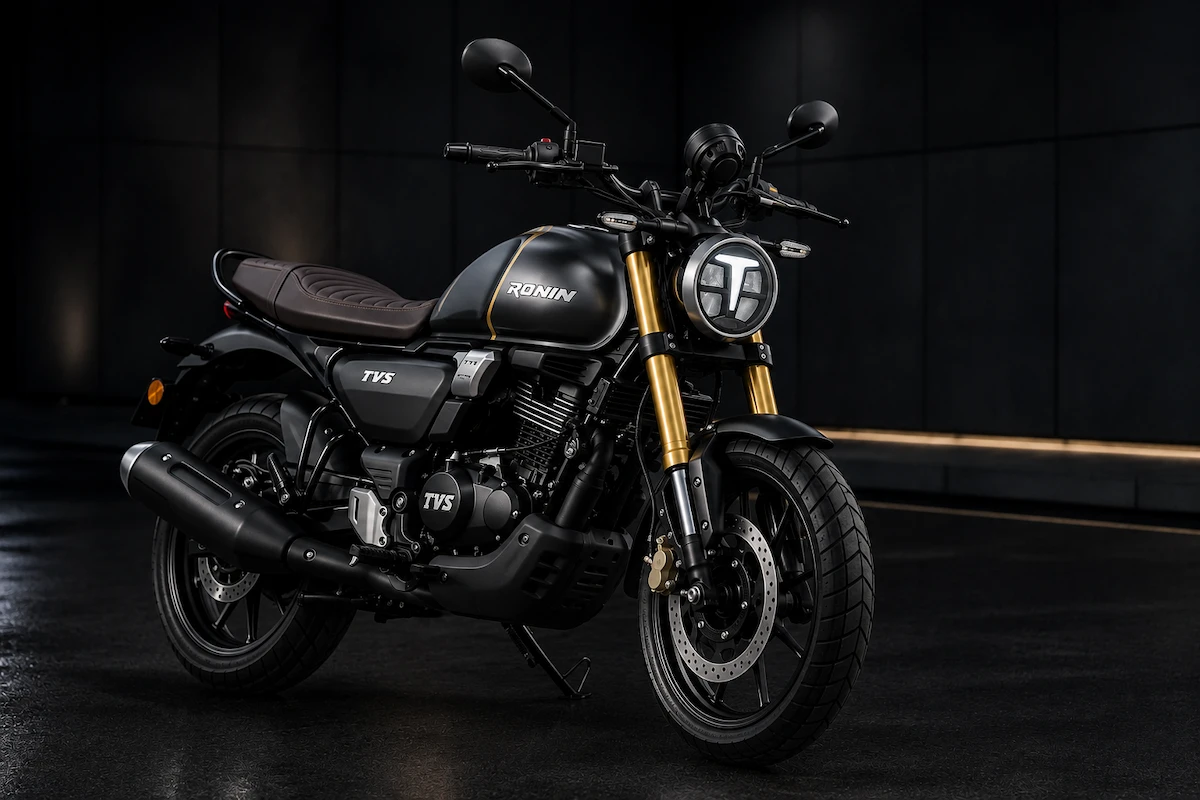
What Exactly Is the TVS Ronin?
This TVS Ronin Review 2026 is for anyone standing at a TVS showroom, unsure whether the Ronin's unusual styling justifies its price over a more conventional 200-250cc bike. In simple terms, the Ronin is a neo-retro, scrambler-flavoured motorcycle that mixes a cruiser-like stance with modern hardware, an unusual mix that has kept it a bit of a niche product since launch.
It's built for riders who commute daily but also want a bike that stands out at a signal — college students, first-time premium-bike buyers, and office-goers who don't want to blend in with the usual crop of sporty commuters. Based on official specifications, the biggest strengths are a torquey low-end engine, an upright and comfortable riding position, and a design that genuinely looks different from anything else on Indian roads.
In 2026, spread across Base, Mid and Top variants with a 41mm USD fork and an assist-and-slipper clutch standard throughout the range, it remains relevant mainly as a stylish city bike rather than a dedicated highway tourer.
TVS Ronin Review 2026 : Quick Overview
| Parameter | Detail |
|---|---|
| Engine | 225.9cc, single-cylinder, 4-stroke, 4-valve, SOHC, oil-cooled |
| Power | 15.01 kW (20.4 PS) @ 7,750 rpm |
| Torque | 19.93 Nm @ 3,750 rpm |
| Gearbox | 5-speed, assist and slipper clutch |
| Mileage | Not published on TVS's official spec pages; third-party sources commonly cite ~42-42.95 kmpl (ARAI) — see Mileage section |
| Fuel Tank Capacity | 14 litres |
| Kerb Weight | 159 kg (Base, Mid) / 160 kg (Top) |
| Seat Height | 795 mm (all variants) |
| Ground Clearance | 181 mm |
| Brakes and ABS | 300mm front / 240mm rear disc; Single Channel ABS on Base, Dual Channel ABS with Rain and Urban ABS modes on Mid and Top |
| Starting Price (Delhi, ex-showroom) | ₹1,26,690 (Base variant) |
| Main Competitors | Royal Enfield Hunter 350, Honda CB200X, Bajaj Pulsar NS200, Hero Xpulse 200, Jawa 42 |
Prices and specifications sourced from TVS Motor Company's official website. Prices vary by city and are subject to change without notice.
TVS Ronin Review 2026 : Quick Verdict
This is an editorial assessment based on official specifications and commonly reported owner feedback, not an aggregated customer rating.
TVS Ronin Price and Variants 2026 (Delhi)
The TVS Ronin is officially sold in three variants — Base, Mid and Top. The figures below are the official Delhi ex-showroom prices listed on TVS Motor's own variant-comparison page, current as of July 2026.
| Variant | ABS Configuration | Delhi Ex-Showroom Price* |
|---|---|---|
| TVS Ronin Base | Single Channel ABS | ₹1,26,690 |
| TVS Ronin Mid | Dual Channel ABS | ₹1,48,040 |
| TVS Ronin Top | Dual Channel ABS | ₹1,60,140 |
*Delhi ex-showroom prices, exclusive of RTO, insurance, and accessories, sourced directly from TVS Motor's official variant-comparison page. Prices differ in other states and are revised periodically; always confirm the current figure at your local dealership.
The feature step-up between variants is clear and officially documented: the Base variant gets Single Channel ABS and normal (non-adjustable) brake and clutch levers; the Mid variant adds Dual Channel ABS while keeping normal levers; and the Top variant adds 3-step adjustable levers along with a "Fully Digital - Connected" speedometer, which is where TVS's SmartXonnect connected features (Bluetooth pairing, voice assist, navigation, ride analysis) are officially listed.
Design and Styling
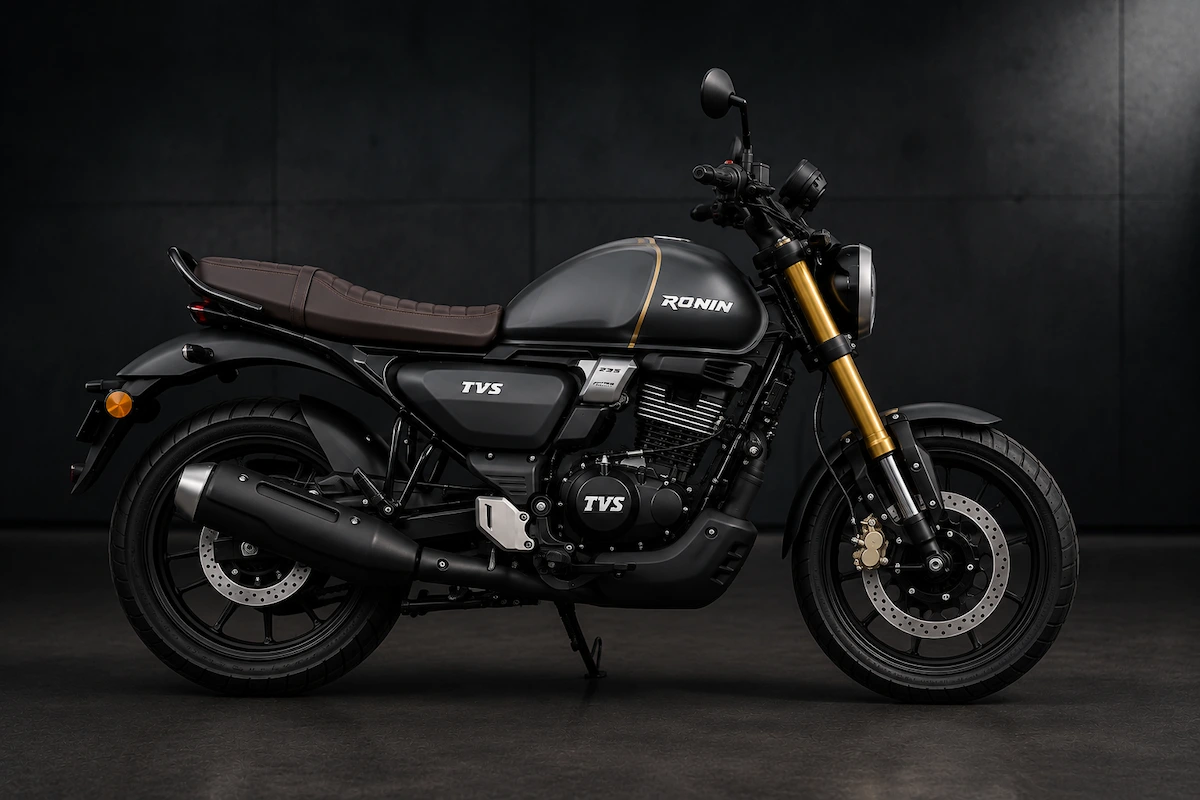
The Ronin's neo-retro design is arguably its biggest talking point. The tank is sculpted and muscular, the AHO LED headlamp carries a "T"-shaped signature position lamp, and the machined 9-spoke alloy wheels, which TVS markets as a first-in-segment feature, add a premium touch that many bikes in this price bracket skip. It's a design that draws attention, for better or worse; it doesn't fit neatly into "cruiser," "scrambler," or "roadster" categories, and that ambiguity is part of what divides opinion.
Tail Section and Exhaust
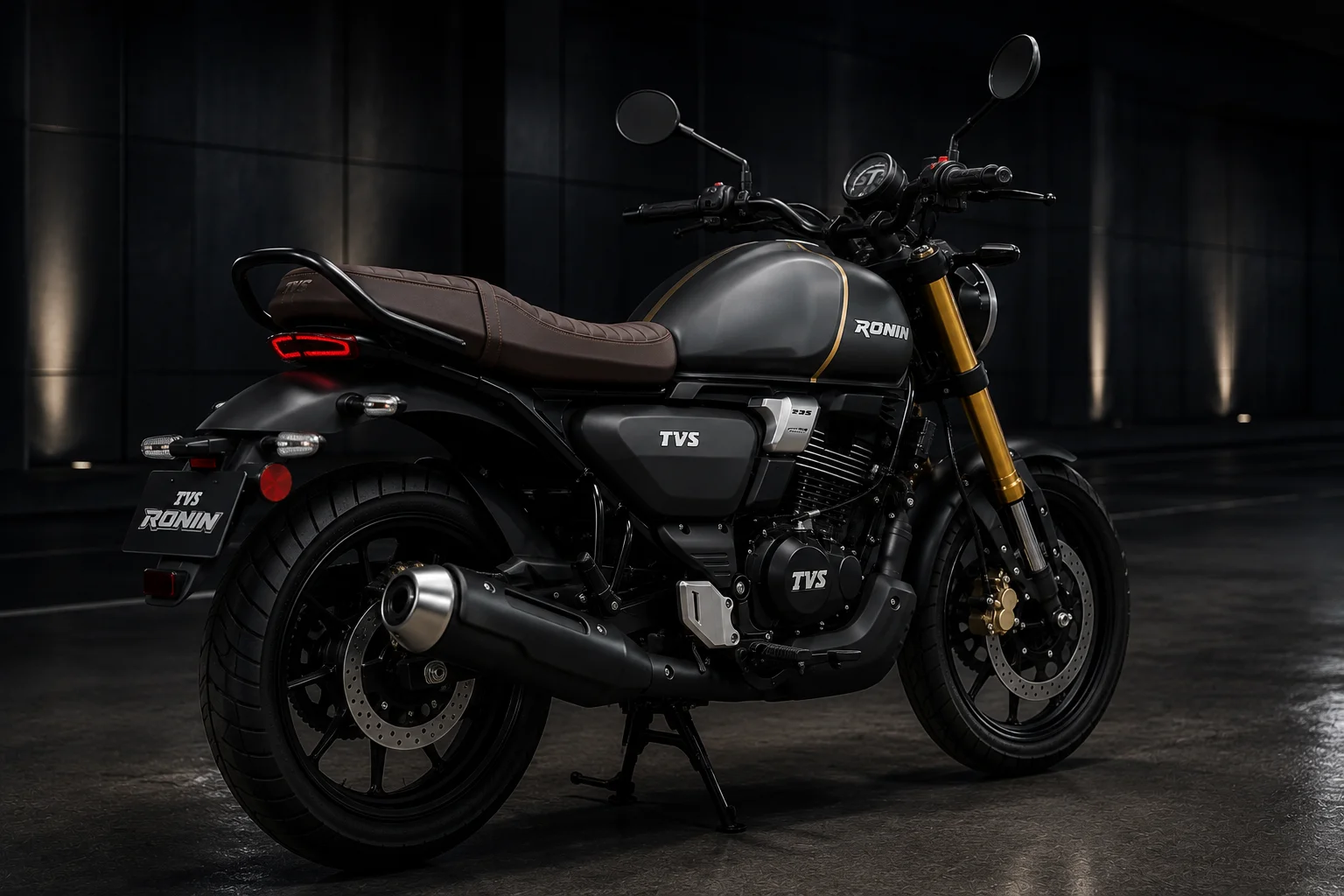
TVS describes the Ronin's black exhaust as a custom design element and the tail lamp as an all-LED unit. The tail section is deliberately minimal, without the bulky grab rails or add-on plastic panels common on commuter bikes. Reported owner feedback commonly indicates that build quality and panel fit are solid for the segment, though the unconventional shapes mean touch-up paint and accessory fitment aren't always as straightforward as on a more conventional motorcycle.
Paint quality across the standard colourways is generally rated well by owners in reported reviews, though this is a subjective impression rather than an official durability claim. The design elements most likely to divide buyer opinion are the asymmetric tank shrouds and the unusually tall stance; some riders love how it stands out, others find it doesn't fit any established genre cleanly.TVS Ronin Review 2026.
Engine and Performance
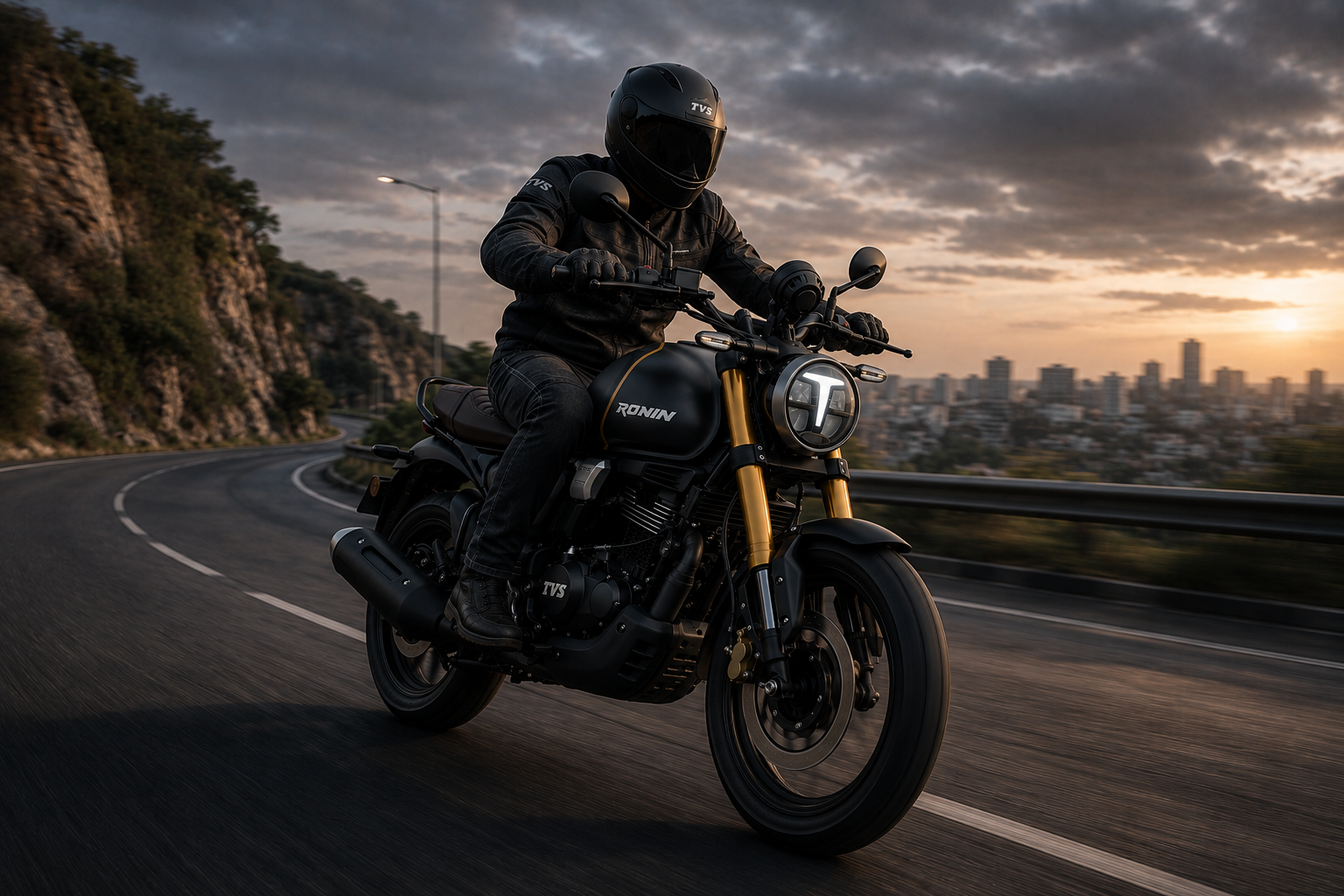
According to TVS's official specifications, the 225.9cc single-cylinder engine produces 20.4 PS (15.01 kW) at 7,750 rpm and 19.93 Nm of torque at 3,750 rpm, figures that point to a bike tuned for low and mid-range response rather than outright top-end numbers. Reported owner feedback commonly indicates that the Ronin pulls cleanly from low speeds, which is exactly what you want in stop-start traffic where you'd rather not be constantly shifting gears. It's a similar low-rev-friendly philosophy to what riders coming from a TVS Apache RTR 160 would already be familiar with, though the Ronin's character leans more relaxed than sporty.
TVS's Glide Through Technology (GTT) reinforces this further: TVS's own description states that riders can engage GTT by releasing the clutch in first, second or third gear and glide through traffic without accelerating, which several reviewers have highlighted as genuinely useful in bumper-to-bumper conditions. The five-speed gearbox with an assist-and-slipper clutch, standard across the range, keeps shifts light and reduces rear-wheel hop on aggressive downshifts.
City-Riding Experience
This is where the Ronin, according to reported owner feedback, genuinely earns its keep. The relaxed, upright riding posture combined with GTT makes crawling through traffic noticeably less tiring than on many sportier commuters, per commonly reported reviews. Low-speed control is described as confident by several reviewers, helped by the wide handlebar and the bike's manageable kerb weight.
Turning radius and manoeuvrability at parking-lot speeds are reported as good, and clutch effort is described as light thanks to the slipper clutch, which matters if your commute involves a lot of first-gear crawling. Some owners note engine heat near the rider's right leg in slow traffic on hot days, though reports don't describe it as alarming.
The 181mm ground clearance and the front USD fork are commonly cited by reviewers as handling typical Indian potholes and speed breakers without drama, with the fork also adding a reassuring stiffness when braking hard for sudden obstacles. Overall, daily commute practicality is one of the Ronin's most consistently praised qualities in reported feedback.
Highway and Touring Experience
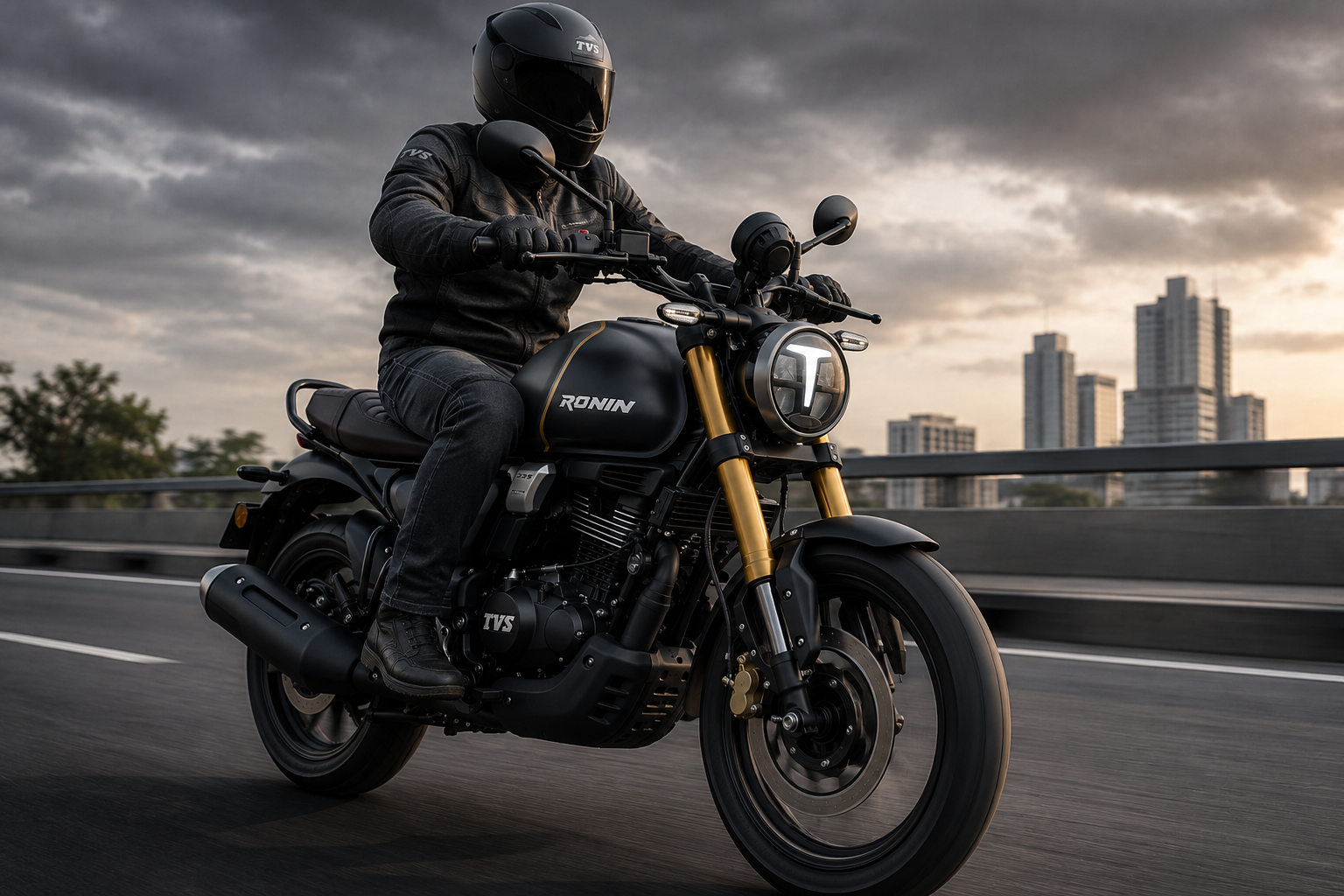
On the open highway, reported owner feedback commonly describes the Ronin as feeling stable and planted at moderate cruising speeds, aided by its relatively wide handlebar and neutral weight distribution. Windblast becomes more noticeable at higher speeds, since there's no fairing, which is expected for this style of motorcycle.
Overtaking is described by several reviewers as requiring some planning rather than instant confidence, given the engine's low-and-mid-range character. Seat comfort on the saddle is generally rated well by owners for solo riders on trips of a few hours, though the pillion seat is narrower and reported owner feedback commonly indicates it isn't ideal for very long duo rides.
Luggage carrying is limited to what you can strap to the tail rack or add via official TVS accessories; there's no built-in provision for hard panniers out of the box. With a 14-litre tank, the realistic fuel range depends on the mileage you achieve (see the Mileage section below). For riders planning frequent long highway days, it's worth comparing the Ronin's highway character against alternatives during a test ride.
Mileage and Fuel Cost
TVS's official Ronin specification and comparison pages, as checked for this review, do not publish an ARAI mileage figure. Several third-party automotive listings and certification-record aggregators commonly cite an ARAI-certified figure of approximately 42-42.95 kmpl, and reported owner mileage across these same third-party sources typically ranges between roughly 35 and 42 kmpl depending on riding style, load and traffic. Because TVS's own pages don't confirm this figure directly, treat it as third-party-sourced rather than an official manufacturer claim, and reconfirm with your dealer if this is a deciding factor.
| Riding Condition | Commonly Reported Mileage (Third-Party) |
|---|---|
| Heavy city traffic | ~35-39 kmpl |
| Mixed city and highway | ~38-41 kmpl |
| Steady highway cruising | ~40-42 kmpl |
With the official 14-litre tank capacity, and using the third-party mileage range above, the estimated full-tank range works out to roughly 490 to 580 km depending on riding conditions.
Sample Monthly Fuel-Cost Calculation
Assuming a petrol price of ₹103 per litre (adjust for your city), monthly riding of 1,200 km, and an average mileage of 38 kmpl:
31.6 litres × ₹103/litre = approximately ₹3,255 per month
Update the petrol price, monthly distance, and mileage figures above to match your own city and riding pattern for a more accurate estimate.
Ride Quality and Handling
The 41mm upside-down front fork, which TVS confirms is standard across the Base, Mid and Top variants, is a genuine highlight at this price point, and reviewers commonly credit it with better rigidity and steering precision than the telescopic forks found on most rivals. The rear monoshock, adjustable across 7 preload steps per TVS's official specifications, is reported by owners to do a competent job soaking up broken roads without feeling harsh.
High-speed stability within the bike's usable speed range and cornering confidence are described positively in reported reviews, for a bike with this kind of upright, wide-bar riding position, though it's not marketed as a machine built for aggressive lean angles. Tyre grip in dry conditions on the 110/70-17 front and 130/70-17 rear tubeless tyres is generally rated adequately by owners; wet-weather grip reports are more mixed, which is common across this tyre segment.
Braking and Safety
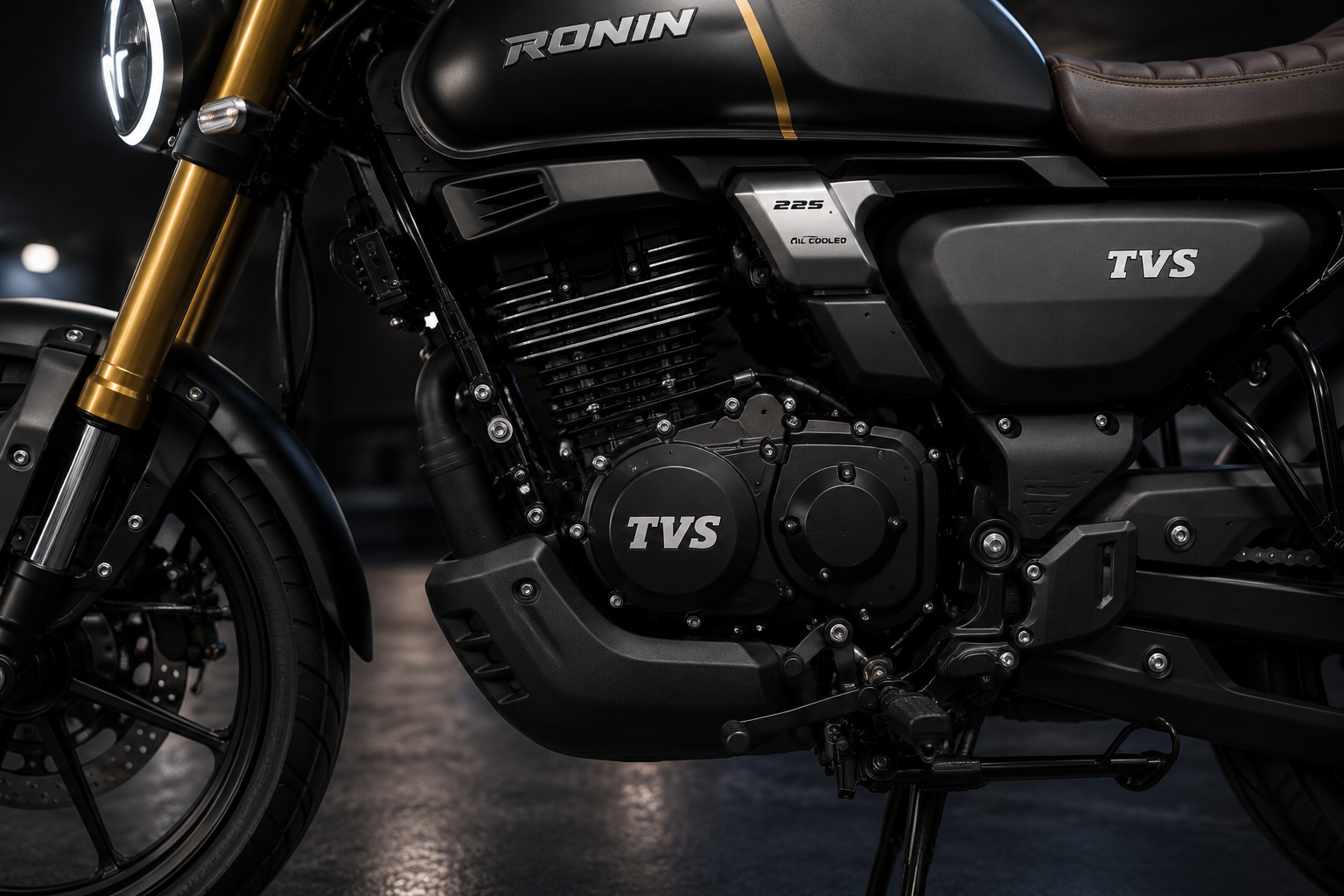
The Ronin uses a 300mm front disc and a 240mm rear disc across the range, per TVS's official specifications. The Base variant gets Single Channel ABS, while the Mid and Top variants step up to Dual Channel ABS; TVS's official terminology for the ABS modes on the Ronin is "Rain and Urban ABS modes," designed to give riders more confidence during braking in different surface and weather conditions.
Braking feel is a subjective impression best judged on your own test ride; TVS has not published an official braking-distance figure, and we won't estimate one here. The full-LED headlamp with its AHO (Automatic Headlamp On) function and "T"-shaped signature position lamp is well regarded for night visibility in reported reviews, with several owners describing a wide, even beam.
Features and Technology
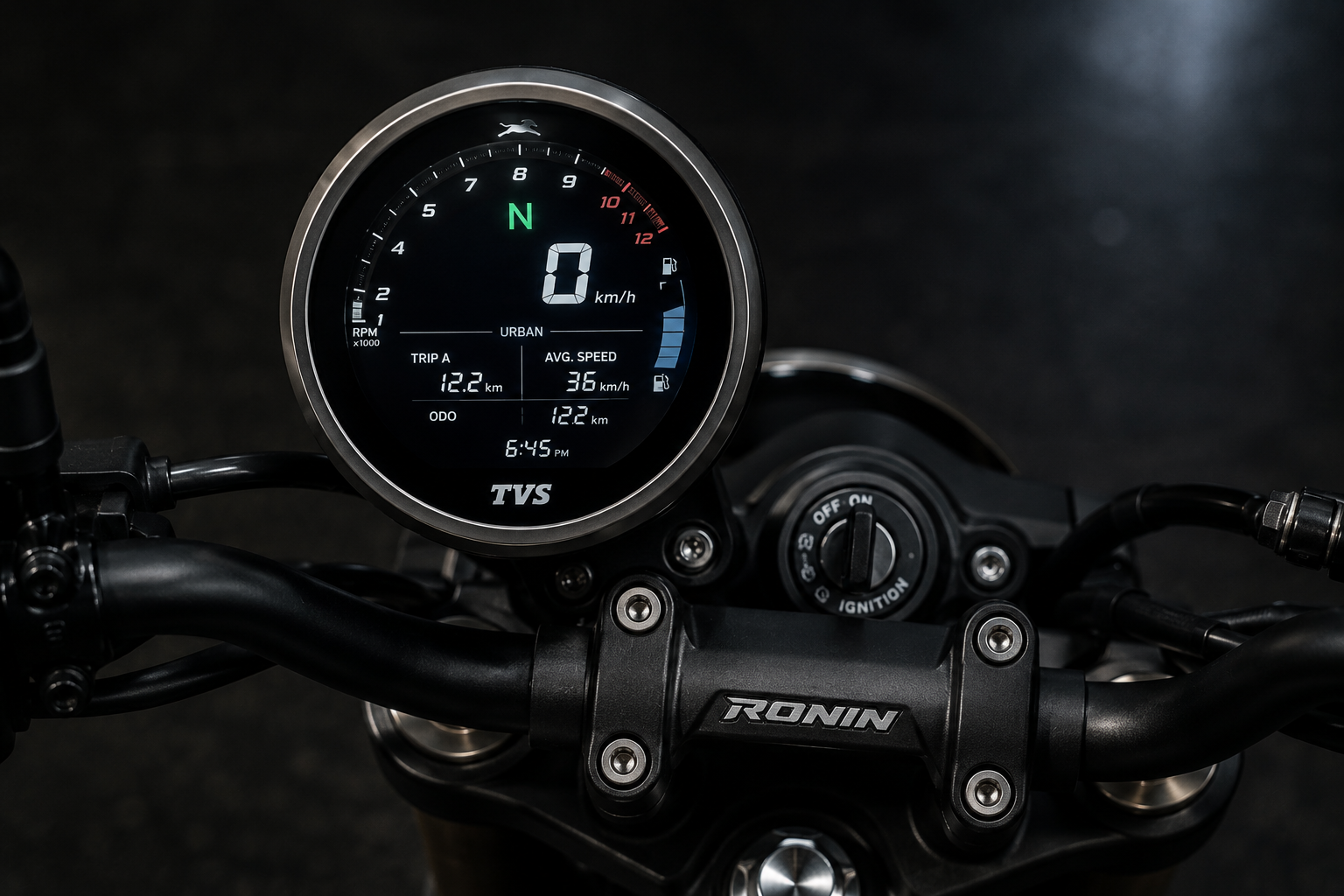
Feature availability differs by variant in specific, officially documented ways, so double-check what's included on the exact trim you're considering before assuming a feature is standard.
Safety and Convenience Features
Instrument Cluster
Asymmetric, off-centre speedometer. Base and Mid get a "Fully Digital" display; Top gets "Fully Digital - Connected."
SmartXonnect / Bluetooth
TVS's official comparison data ties the "Connected" display — and therefore Bluetooth pairing, voice assist, navigation, call/SMS alerts and ride analysis — to the Top variant.
ABS Modes
Rain and Urban ABS modes, part of the Dual Channel ABS system on Mid and Top variants.
Glide Through Technology
Lets the bike glide at low speed in 1st, 2nd or 3rd gear without continuous throttle or clutch input, standard across the range per TVS.
Feather Touch ISG
Electric Integrated Starter Generator for a quieter, lighter-touch engine start.
LED Lighting
AHO LED headlamp with "T"-shaped signature position lamp, LED tail lamp, LED turn signal lamps.
Adjustable Levers
3-step adjustable clutch and front brake levers on the Top variant; Base and Mid get normal (non-adjustable) levers.
Side Stand Inhibitor
Prevents the engine from starting, and shows a display warning, if the side stand is down.
Distance to Empty
Estimates remaining range based on fuel left and instantaneous mileage.
Gear Shift Indicator
Displays real-time suggestions on when to shift up or down.
Because Bluetooth connectivity and the associated app features are officially tied to the Top variant's connected speedometer, buyers who specifically want SmartXonnect features should confirm this with their dealer and budget for the Top trim rather than assuming it's available across the range.
Comfort and Ergonomics
The rider triangle is relaxed and upright, with a wide handlebar that's easy to reach without stretching. Footpeg placement is neutral rather than sporty, which reported feedback suggests suits long commutes better than aggressive riding. The seat is well-cushioned for the rider according to several owner reviews, which commonly indicate it holds up well on rides lasting a couple of hours before fatigue sets in.
TVS's official seat height figure is 795 mm across all three variants, and reported feedback suggests riders on the shorter side generally manage this comfortably thanks to the bike's narrow midsection, though very short riders should sit on it in person before deciding. Pillion comfort is described as adequate for shorter trips in reported reviews, but the pillion perch is narrower and less cushioned than the rider's seat, so it's not the ideal choice if two-up long-distance touring is a priority.
Dimensions and Full Specifications
Engine and Transmission
| Engine Type | Single Cylinder, 4 Stroke, 4 Valve, SOHC, oil cooled |
|---|---|
| Displacement | 225.9 cc |
| Bore x Stroke | 66 mm x 66 mm |
| Max Power | 15.01 kW (20.4 PS) @ 7,750 rpm |
| Max Torque | 19.93 Nm @ 3,750 rpm |
| Gearbox | 5-speed |
| Fuel System | Fuel Injection (FI) |
| Clutch | Assist and Slipper clutch |
Performance
| Mileage | Not published by TVS on official spec pages; see Mileage section for third-party figures |
|---|---|
| Top Speed | Not officially published by TVS; not stated here |
Chassis and Suspension
| Frame | Double Cradle Split Synchro Stiff Frame |
|---|---|
| Front Suspension | 41 mm USD fork |
| Rear Suspension | Monoshock, 7-step adjustable preload |
Brakes and Tyres
| Front Brake | 300 mm disc |
|---|---|
| Rear Brake | 240 mm disc |
| Braking System | Single Channel ABS (Base) / Dual Channel ABS (Mid, Top) |
| ABS Modes | Rain and Urban ABS modes |
| Front Tyre | 110/70-17 Tubeless |
| Rear Tyre | 130/70-17 Tubeless |
| Wheels | 9-Spoke Alloy Wheels |
| Lever Type | Normal Levers (Base, Mid) / 3-Step Adjustable Levers (Top) |
Dimensions and Weight
| Length | 2,040 mm |
|---|---|
| Width | 805 mm |
| Height | 1,170 mm |
| Wheelbase | 1,357 mm |
| Ground Clearance | 181 mm |
| Seat Height | 795 mm (all variants) |
| Kerb Weight | 159 kg (Base, Mid) / 160 kg (Top) |
| Fuel Tank Capacity | 14 litres |
Electrical and Features
| Headlamp | AHO, LED with "T"-shaped signature position lamp |
|---|---|
| Brake / Tail Light | LED |
| Turn Signal Lamp | LED |
| Fuel Gauge | Digital |
| Speedometer | Fully Digital (Base, Mid) / Fully Digital - Connected (Top) |
Warranty and Service Information
| Standard Warranty | Not stated on the official pages reviewed for this article; confirm current terms with your TVS dealer, as warranty policies are periodically revised |
|---|---|
| Extended Warranty | Available as a paid option through TVS dealerships; ask for current terms and cost |
Specifications sourced from TVS Motor's official Ronin features and compare pages. Feature and colour availability depends on the variant and may change; please reconfirm the exact specification sheet at your nearest TVS dealership before purchase.
TVS Ronin Colours
Per TVS Motor's official variant-comparison page, colour availability is tied directly to the variant you choose:
Ronin Base
Lightning Black and Magma Red — Mono Tone decal, Black USD fork. Best for a low-maintenance look and the sportiest, most attention-grabbing red option.
Ronin Mid
Charcoal Ember and Glacier Silver — Triple Tone decal, Bright Gold USD fork. Strong road presence without looking flashy.
Ronin Top
Nimbus Grey and Midnight Blue — Triple Tone decal, Bright Gold USD fork. The most premium, understated appearance in the range.
Service, Maintenance and Ownership Cost
TVS's official pages reviewed for this article do not publish an exact service interval schedule or itemised service cost list; check your service booklet or dealership for the schedule applicable to your specific purchase date. Commonly reported routine-service expenses for a 225cc-segment motorcycle in India range roughly between ₹500 and ₹1,500 per visit depending on what's due, though this is a general estimate rather than an official TVS figure.
Annual maintenance costs, factoring in scheduled services, oil changes, and periodic consumables, are commonly estimated in the ₹3,000-₹6,000 range for normal usage by third-party sources, though actual costs vary by city, riding distance, and whether you use TVS Genuine Parts or aftermarket alternatives. Chain maintenance is straightforward and should be lubricated every few hundred kilometres, particularly after wet-weather riding. Tyres and brake pads are wear items whose replacement cost depends on the brand chosen at the time.
Practical Ownership
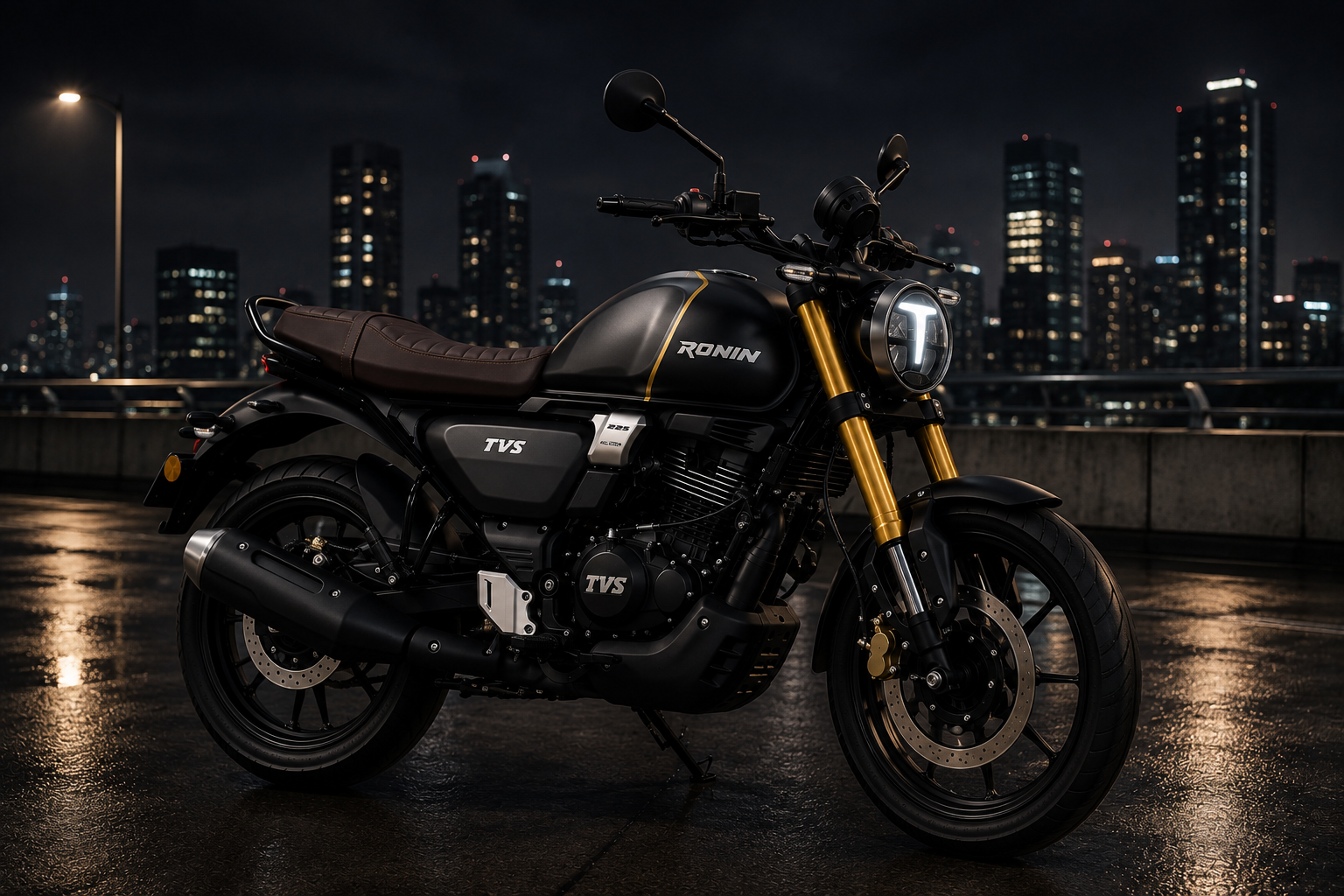
Day to day, the Ronin is easy to live with according to reported owner feedback: manageable kerb weight for parking and manoeuvring, straightforward cleaning thanks to relatively simple body panels, and a fuel range that comfortably covers a week of commuting between fill-ups for most riders. TVS's official accessory catalogue supports the Ronin well, with everything from touring racks to protection gear available through TVS's own shop.
Some riders have reported occasional difficulty finding Ronin-trained service staff at smaller-town dealerships soon after launch, though this has reportedly improved as the model has matured in the lineup. We'd frame this as a point worth asking about locally rather than a universal defect, since service quality can vary significantly by dealership.
Pros and Cons
Advantages
- Distinctive design that stands out from typical 200-250cc commuters, with genuine road presence.
- Torquey low-end engine character combined with Glide Through Technology, which reported owner feedback describes as making stop-start traffic noticeably less tiring.
- 41mm USD front fork standard across the range, offering better steering precision than telescopic forks on most rivals at this price.
- Strong TVS service network across India, reducing the risk of parts or service delays.
- Comfortable, upright ergonomics reported as suited to daily commuting and casual weekend rides.
– Limitations
- Highway character is, per reported reviews, geared more toward moderate cruising than sustained high-speed touring.
- No direct rival in its niche, making it harder to benchmark value against a clear like-for-like alternative.
- Pillion comfort is described as adequate rather than genuinely long-distance friendly in reported feedback.
- SmartXonnect/Bluetooth connectivity is Top-variant only, so Base and Mid buyers don't get the connected display or app features.
Who Should Buy the TVS Ronin?
The Ronin suits daily commuters who want their bike to look distinctive without stepping up to a much pricier premium segment. It works well for college riders and office-goers covering typical 20-40 km daily commutes, and for first-time premium-bike buyers moving up from a scooter, a TVS Ntorq 125, or an entry-level commuter such as the TVS Raider 125. Relaxed weekend riders and light tourers who don't need to cover huge highway distances in a single stretch will also find it comfortable, based on reported owner experiences.
Who Should Avoid It?
Riders who want aggressive performance or sharp handling should look elsewhere — the Ronin isn't marketed for that. Buyers wanting a traditional cruiser character, or genuine off-road capability, will find the Ronin's road-biased tyres and ground clearance limiting. Riders who regularly sustain very high highway speeds, or who need generous pillion space for long two-up trips, should consider alternatives better suited to those needs.
TVS Ronin vs Royal Enfield Hunter 350
The Hunter 350 is the bike most buyers cross-shop against the Ronin, even though the two come from genuinely different design philosophies.
| Parameter | TVS Ronin | Royal Enfield Hunter 350 |
|---|---|---|
| Engine Character | Peppy, torquey low-end (20.4 PS, 19.93 Nm) | Thumpy, relaxed, classic single-cylinder feel (20.2 bhp, 27 Nm) |
| Displacement | 225.9cc | 349cc |
| Kerb Weight | 159-160 kg | Approximately 177-181 kg depending on variant |
| Fuel Tank / Mileage | 14 litres; third-party sources report ~35-42 kmpl | 13 litres; ARAI-claimed 36.2 kmpl, with real-world figures commonly reported around 30-35 kmpl |
| Connectivity | SmartXonnect Bluetooth cluster on the Top variant only | Semi-digital cluster with Tripper navigation pod compatibility on select variants |
| Comfort | Upright, city-friendly riding posture, per reported feedback | Retro-classic riding posture with a single-piece seat, per reported feedback |
| Service Network | Extensive TVS network across India | Extensive Royal Enfield network across India |
| Road Presence | Bold, unconventional neo-retro styling | Classic, widely recognised retro-roadster look |
| Starting Price (ex-showroom, Delhi) | ₹1,26,690 (Base) | Approximately ₹1.37-1.38 lakh (Base), rising to roughly ₹1.70 lakh for the Top variant |
| Best Use Case | City commuting with occasional weekend rides | Relaxed cruising and highway touring, per commonly reported positioning |
Neither bike is a straightforward "winner." The Hunter 350's larger 349cc engine and established retro-roadster identity make it the more familiar choice for buyers who want classic Royal Enfield character and a bit more highway muscle, even at a higher starting price. The Ronin counters with a lower entry price, a lighter chassis, and hardware — the 41mm USD fork in particular — that's unusual at this price point, along with sharper, more contemporary styling. If your priority is a lighter, torquier commuter with distinctive looks and dual-channel ABS available at a lower cost, the Ronin makes more sense; if you want classic single-cylinder character, larger displacement, and Royal Enfield's brand pull, the Hunter 350 is the stronger pick. Test-riding both back to back remains the most reliable way to decide which character suits you.
Short Competitor Comparison
The Ronin doesn't have a true one-to-one rival, since it straddles cruiser, scrambler and roadster design cues. Still, buyers commonly cross-shop it against a few alternatives in a similar price and use-case range, per reported market comparisons: the Honda CB200X, which leans toward light-adventure styling; the Hero Xpulse 200, positioned as more off-road capable but with a more basic feature set; the Bajaj Pulsar NS200, generally described as quicker in a straight line but less focused on commuting comfort; the Honda Hornet 2.0, which offers sharper handling dynamics; and the Jawa 42, another neo-retro alternative with its own distinct design language. We'd recommend verifying exact specifications and prices for each of these directly with their respective manufacturers before comparing.
Recommended TVS Ronin Accessories
Full-Face Helmet
Essential protection for daily commuting and highway stints, especially given the Ronin's windblast at speed.
- Check for an ISI or DOT/ECE certification mark.
- Confirm a snug, correctly measured fit before buying.
Riding Gloves
Improves grip on the wide handlebar and protects hands during longer city and highway stints.
- Look for knuckle protection.
- Check breathability for hot Indian summers.
Bike Cover
Protects the Ronin's paint and alloy wheels from dust and sun exposure when parked outdoors.
- Pick a UV-resistant, breathable fabric.
- Verify the size matches the Ronin's dimensions.
Related TVS Reviews
Is the TVS Ronin Worth Buying in 2026?
For the right buyer, yes. If you commute daily in city traffic, want a motorcycle that looks genuinely different from the crowd, and don't need serious highway touring range, the TVS Ronin Review 2026 conclusion is straightforward: it remains a solid, likeable option in its price bracket. It isn't marketed as a Hunter 350 rival on highway character, and buyers expecting that should compare both bikes carefully before deciding.
Its strongest use case, based on official specifications and reported owner feedback, is city and short-trip riding, where the low-end torque, GTT, and comfortable ergonomics all work in its favour. The trade-off buyers should weigh is a highway character geared more toward moderate cruising than sustained high-speed touring, and a pillion seat that's better suited to short trips than long tours.
The Ronin Mid variant offers a reasonable value balance, pairing Dual Channel ABS with a moderate price step over the Base trim, while the Top variant is the one to choose if SmartXonnect Bluetooth connectivity and adjustable levers matter to you. Anyone deciding between the Ronin and more conventional alternatives should test-ride it before committing, since its unusual seating position and styling are a personal preference more than an objective spec-sheet advantage. At the dealership, check the exact colour-wise feature list, current on-road quotation, and any active finance offers before signing.
Dealership Test-Ride Checklist
- Seat comfort over a 15-20 minute ride
- Handlebar reach for your height
- Pillion comfort with a second rider aboard
- Clutch effort in stop-start traffic
- Smoothness of gear shifts across all five gears
- Low-speed balance and U-turn manoeuvrability
- Engine heat near the rider's leg in traffic
- Suspension feel over broken pavement or speed breakers
- Braking feel and confidence, both front and rear
- Instrument console readability in sunlight, and whether it's the Connected version
- Exact features included on your chosen variant and colour
- Final on-road price quotation in writing
- Insurance options and premium comparison
- Extended warranty terms and cost
- Available official accessories and their pricing
- Manufacturing month and year of the specific unit offered
Frequently Asked Questions
Is TVS Ronin worth buying in 2026?
For daily city commuting with occasional weekend rides, yes. It offers distinctive styling, a torquey low-end engine, and a strong service network. Based on reported feedback, it's less suited to buyers who prioritise sustained high-speed highway touring.
What is the real-world mileage of the TVS Ronin?
TVS has not published an ARAI mileage figure on its official specification pages. Third-party sources commonly cite an ARAI-certified figure of approximately 42-42.95 kmpl, with reported real-world mileage ranging roughly between 35 and 42 kmpl depending on riding style and conditions.
Is the TVS Ronin good for long rides?
It's reasonably comfortable for solo riders on trips of a few hours, per reported feedback, but limited pillion comfort makes it less ideal for frequent long-distance touring compared to bikes built specifically for highway cruising.
Is the TVS Ronin suitable for beginners?
Yes, its manageable kerb weight (159-160 kg), light clutch, and upright ergonomics make it approachable for first-time premium-bike buyers, based on official specifications and reported feedback.
Is the TVS Ronin better than the Hunter 350?
Neither is strictly better. The Ronin suits city commuting with a lighter engine and lower Base-variant price, while the Hunter 350 is generally positioned around relaxed highway cruising with a larger-displacement, classic single-cylinder character. Confirm current Hunter 350 specifications with Royal Enfield directly.
Is the TVS Ronin good for daily commuting?
Yes, this is one of its most consistently praised qualities in reported feedback, thanks to Glide Through Technology, a light clutch, and comfortable low-speed manoeuvrability.
Does the TVS Ronin have dual-channel ABS?
Dual Channel ABS with Rain and Urban ABS modes is available on the Mid and Top variants. The Base variant uses Single Channel ABS. This is confirmed on TVS's official variant-comparison page.
Which TVS Ronin variant is best?
It depends on your priorities. The Mid variant adds Dual Channel ABS over the Base trim at a moderate price step. The Top variant is the only one with SmartXonnect Bluetooth connectivity and adjustable levers, per TVS's official comparison page.
What is the approximate service cost?
TVS's official pages don't publish an itemised service cost list. Third-party estimates commonly suggest ₹500-₹1,500 per routine visit, with annual maintenance around ₹3,000-₹6,000 depending on usage. Confirm exact costs with your local dealership.
Is the pillion seat comfortable?
It's described as adequate for shorter trips in reported feedback, but narrower and less cushioned than the rider's seat, making it less suited to long two-up rides.
What is the approximate on-road price?
The official Delhi ex-showroom price for the Base variant is ₹1,26,690. On-road pricing adds RTO tax, insurance, and registration, and varies by city. Confirm the exact number with your local TVS dealership.
Does it have Bluetooth connectivity?
Bluetooth connectivity via TVS SmartXonnect is tied to the "Fully Digital - Connected" speedometer, which TVS's official comparison page lists specifically for the Top variant. Base and Mid variants get a non-connected Fully Digital display.
What is the fuel-tank range?
With an official 14-litre tank and third-party-reported real-world mileage between roughly 35 and 42 kmpl, the estimated range is approximately 490 to 580 km per full tank.
Is it suitable for shorter riders?
Generally yes, thanks to the Ronin's official 795mm seat height across all variants, though very short riders should sit on the bike in person at the dealership to confirm comfortable reach to the ground.
Sources and Accuracy Note
Specifications, variant names, colours and Delhi ex-showroom prices in this article were checked against TVS Motor Company's official website, specifically the Ronin features, compare and pricing pages, current as of July 2026. Figures not published on these official pages, such as ARAI mileage and top speed, are clearly labelled as third-party-sourced rather than official TVS claims. Prices are subject to change without notice by TVS Motor Company, and on-road prices differ by city due to RTO tax and insurance variations. Riding impressions on comfort, engine feel, and braking reflect reported owner and reviewer feedback rather than a RiderRaj-conducted test. Readers should confirm the final on-road quotation, current variant-wise features, and warranty terms with an authorised TVS dealership before making a purchase decision.